Georgette Bauerdorf

    Blogroll

    Stats

    • Pages displayed : 18808
    • Unique visitors : 10898
    • Pages displayed in last 24 hours : 21
    • Unique visitors in last 24 hours : 12

    Meta

    For June Zeigler


    June, early 1940's

    A tribute from our special guest contributor:

    June Zeigler, Georgette Bauerdorf's good friend and confidant, fled Los Angeles shortly after the murder.

    She had been besieged by reporters about the murder and was distraught. She cashed in her savings, bought a fur coat to fend off the cold in the east and traveled by train to Hartford, Connecticut. There she married one of those young, handsome Marines and made a life for herself as a post war bride and eventually a mother.

    This story is dedicated to her and all those who gave up so much to help the war effort and to those like Georgette Bauerdorf who even gave up their lives.

    J.Q.T.

    June Zeigler's daughter


    June and Bill

    Bill and June Quinn

    The Stork Club, 1944


    June Lorraine Zeigler left California for Connecticut after the murder of Georgette Bauerdorf in October, 1944. She reunited with her fiance, William Joseph Quinn, and they married on November 28, 1944.

    June and Bill lived first in Hartford and later in Brooklyn, New York. Bill Quinn was a Pfc in the Marines 4th Division. He was a decorated sharpshooter and was awarded Purple Hearts for wounds received in the Pacific.

    The young couple honeymooned in New York, where they had their picture taken at Sherman Billingsley's Stork Club, which Georgette had written of in letters to June.

    In 1946, June and Bill moved to California.

    June in Big Bear, California

    Photograph by Doris Puckett


    Doris Puckett

    L.A. City Hall in the background


    The Hollywood Canteen

    "For Servicemen"

    Cahuenga Boulevard, 1943


    Georgette Bauerdorf

    Hollywood Canteen Photo ID


    Doris Puckett

    Hollywood Canteen Photo ID


    Junior Hostesses on the Town

    Shirley, June, Doris & friends at the Hollywood Palladium, 1944.


    Hollywood Postcard

    Postcard


    Hollywood Canteen

    Postcard


    Hollywood Canteen

    1944


    Hollywood Canteen

    June Zeigler, 4th girl from the left


    Hollywood Canteen

    Matchbook


    April 15, 1944


    Dearest June -

    Hello lamb - My conscience has been bothering me since I'm now sure I won't be able to get to Laguna as I promised you I would- you see - I'm leaving on the night of the 25th and have to spend a day in Chicago-thusly at that rate I won't get home to L.A. fore the 29th of April - I wanted to leave on the 18th but the trains are so crowded and even so I've spent 6 hours so far this week in a ticket office but then I know I shouldn't be traveling now. I finally got my ticket - since I'm going through Phoenix, Lou is going to meet me at the train, but I'm not counting on it 'cause the Army might change his mind - but I'm hoping to very much. He has written me 'gain and enclosed a wonderful picture of himself in the plane he soloed in. Incidentally did you know that the Army Air Corps is frozen, and also that 75% of the boys washout now in cadet training. Don't you think that's terrific. It's too bad your Navy cadet washed out. He must feel pretty bad. It always means so much to them, however, the Navy is much harder that the a.a.c., since the requirements are higher. With all this, I'm awful worried 'bout Lou 'though he seems to be doing very well as far as I know - he soloed after less than 10 hours. Do you know if that's good or bad?

    Bud finally wrote me - on the 16th of March but I didn't receive it 'til the 10th of April, but it's the nicest letter I've received and t'was more than worth waiting for - He's in Ne Guinea and it's really a horrible place so he says - He's got his own boat crew now, and seems to be well, but not too happy in New Guinea which is understandable.

    Junie, you're just an angel to ask Bill 'bout Jeff - Thank-you so much. Also for writing me 'bout Laguna - I'm so sorry 'bout the whole situation. Can you get another girl in my place? If not I'll square up with you later.

    Bob has still been writing me and telegramming me but as yet hasn't been able to get up to N.Y. - I would like to see him 'for he goes overseas which will be very shortly. Jack, my brother-in-law is bombing ---- out of Berlin and Connie is anxiously waiting for him to return to N.Y.

    Incidentally I do not know if Clark Lou's a/c friend is with him, but I do hope so - Lou has put in for twin engines and his next training schools /basic/ are mostly in Calif. - thusly I'm hoping madly that I'll be able to get you an a/c date - t'will be the 3rd try and the 3rd time works like a charm.

    Your new suit sounds very nice, and I imagine you look pretty smooth in it - I got a dopey flower hat & a summer dress with no back for Phoenix - Did you have a nice Easter at the Canteen. I guess the morale there was pretty low - .

    Per usual, it's raining here in N.Y. but I love it anyway. My room faces the East River and I can always see many boats and also hear fog horns - many coastguard patrol this river - thusly, I'm very partial to this room and view. Im not in love and neither is Bud, however, he still needs and wants to dash 'round and so do I. Also I've decided I don't know him very well - incidentally a girl my sister met in Yuma, Ariz. and who went to school with Bud (she's now married to a 2nd Lt.) is now in N.Y. Isn't that a coincidence!"

    I'm running out of words Junie. Thusly have a wonderful time in Laguna and take it easy. Bye 'til next time -

    Lots of love

    Georgette

    [New York, New York]


    Frederick Atwood


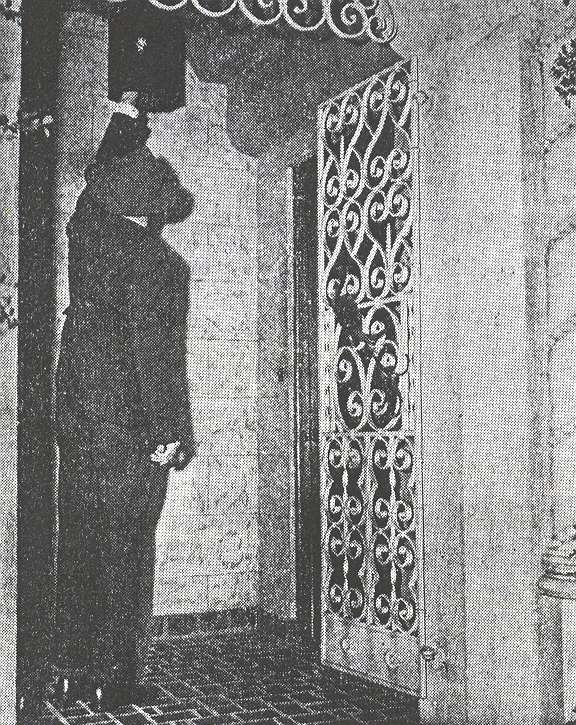
    Testimony concerning vestibule light:

    "Well, the children found it that night after it happened. They went in next door to wash dishes; that was in the apartment in the same vestibule and they came out and were scared and told me the light was out and my youngest girl went to another apartment to wash dishes, and while she was gone, the other was with me in the basement and I took her with me to put the light in, and the light bulb was at least not screwed in a couple of turns."


    The Stork Club, NYC

    Matchbook Cover


    Stork Club Owner

    Sherman Billingsley


    Vanderbilt Hotel

    New York City


    Washington-Youree Hotel

    Shreveport, Louisiana


    Family Plot

    Woodlawn Cemetery, NY


    Rest in Peace

    Woodlawn Cemetery, NY


    Recent Comments

    Chapter 1 ~ El Palacio

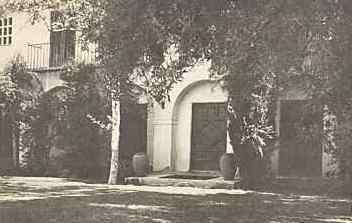
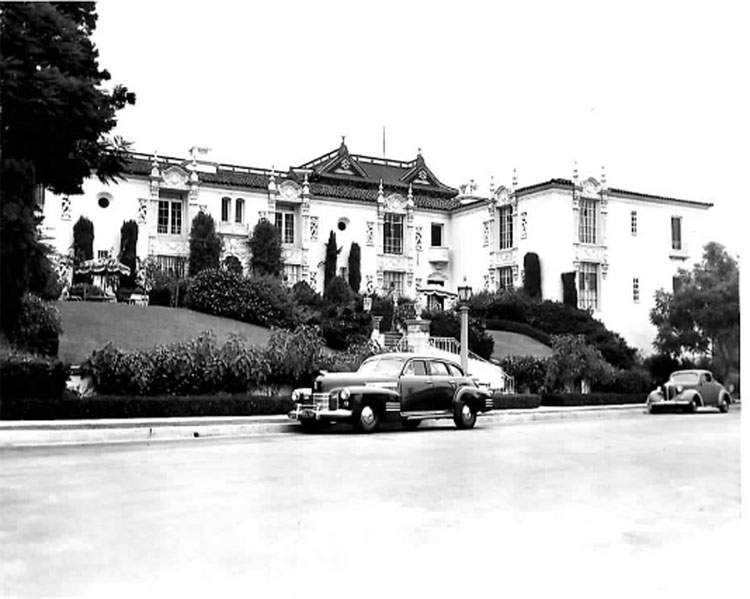
    Driving west on Fountain Avenue, just before reaching La Cienega Boulevard in West Hollywood, a gracious Spanish Baroque style apartment building rises above street level on the right. The exclusive El Palacio Apartments, home to many celebrities over the years, was also home to young, oil heiress Georgette Bauerdorf in 1944.

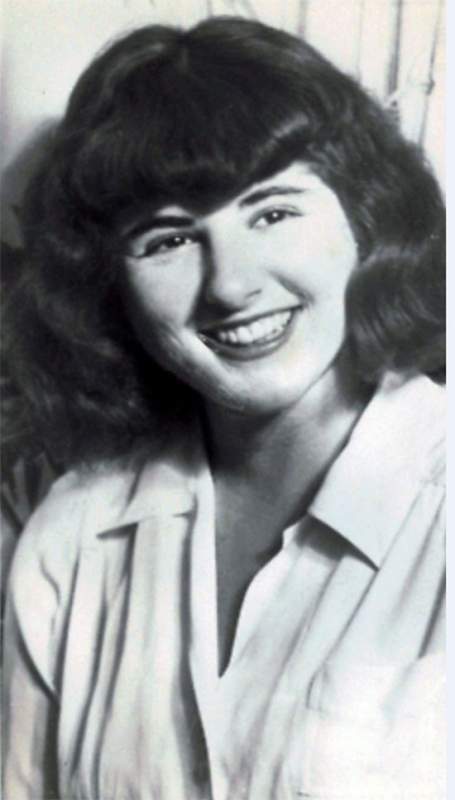
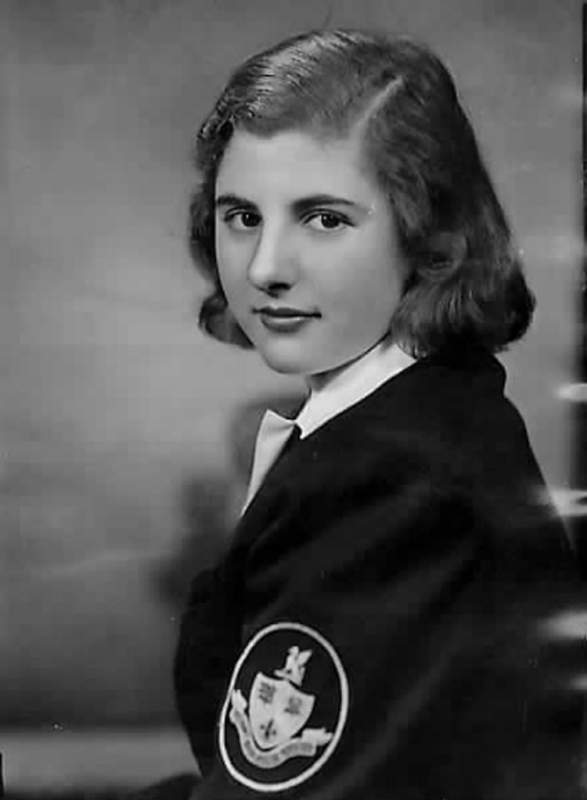
    Georgette, an attractive 20 year old brunette with a big smile and a proper upbringing, lived alone in West Hollywood at the family’s apartment. She kept herself busy with a job at the Los Angeles Times and with volunteer work at the Hollywood Canteen on Wednesday evenings.

    Her father, stepmother and sister moved back to New York that summer. Connie, her sister, left her coupe in California and Georgette drove it around Hollywood, often leaving it parked in front of the El Palacio or just across the street.

    The apartment, built in 1931, which faced Fountain Avenue below, was a spacious upstairs-downstairs arrangement of main room, dining room and kitchen on the lower level, and two bedrooms and a bathroom on the upper. There was a small patio outside the rear door to her kitchen and there were gardens and outdoor furniture in the front that offered privacy and comfort. From the street level, tenants walked up steps through terraced lawns that led to the fashionable apartments.

    Among Georgette’s neighbors was MGM actress Virginia Weidler. “Ginny” Weidler was born in Eagle Rock in 1926 and had a successful film career, appearing as Norma Shearer’s daughter in The Women, Katherine Hepburn’s sister in The Philadelphia Story and Mickey Rooney’s sister in Young Tom Edison. She graduated from the Hollywood Professional School in June, 1944, brief months before Georgette’s death.

    Rose Gilbert, Mr. Bauerdorf’s secretary, spent time at the apartment tending to his interests and occasionally accompanying Georgette on shopping trips. El Palacio management employed full time caretakers that lived on the property and Georgette had maid and janitorial service provided for her. It was comfortable lifestyle, and by all appearances, she lived a charmed life.

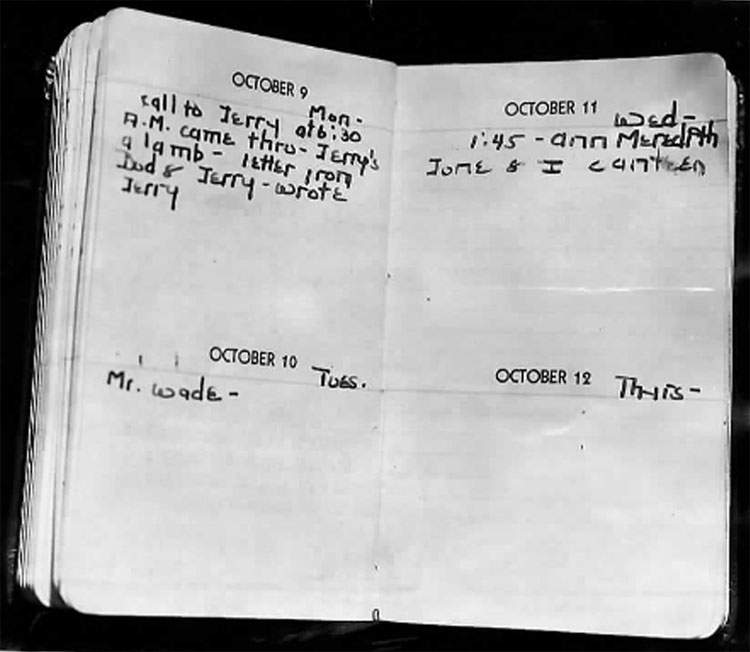
    But on October 11, friends noticed that Georgette seemed agitated.

    Chapter 2 ~ Georgette

    Georgette Elise Bauerdorf was born in New York City on May 6, 1924. Her mother, Constance, died at 40 years old in New York in 1935. Georgette was “schooled in a convent in New York, on Long Island,” according to Rose Gilbert. When she moved to California, she went to the prestigious Marlborough School, a girl’s preparatory school in Los Angeles, where students were known as “Violets,” named after the school mascot. She also attended Westlake School for Girls in the Holmby Hills section of Los Angeles, where she graduated in 1941. Fellow alumni included actresses Shirley Temple and Myrna Loy.

    Georgette’s older sister, Connie, married Jack Dillon, an army pilot who flew missions over Berlin during the war. Her father, George Bauerdorf, was a Wall Street financier, with oil interests in Louisiana, Texas and Nevada. He remarried after Constance’s death. His new wife, Thelma was with him until his death in Los Angeles at 76 in 1961. Thelma died at 95 in 1997.

    After graduation, Georgette volunteered at the Hollywood Canteen and worked in the Women’s Service Bureau at the Los Angeles Times. She liked boys, especially ones in uniform, and often talked and wrote about marines, soldiers, sailors and fliers.

    She kept a little red address book and filled it with the names of boys she met.

    * * *

    When she was growing up, Georgette went to Europe with her family, but later, as a young adult during wartime, she traveled around the United States. In November, 1943, she visited San Francisco. In February, 1944 she traveled by train from Los Angeles to New York, with stops along the way. She had not been home in almost four years. She de-trained briefly in El Paso on February 22 and crossed the U.S. – Mexico border into Juarez for an hour or so. Afterwards, she continued on her way to Shreveport, Louisiana, where her father had business interests. She stayed at the Washington-Youree Hotel in Shreveport in late February and early March.

    Georgette sent postcards and letters to June in Los Angeles when she was traveling. In Shreveport, she asked June, “-are you still going to the Canteen? I think of it every Wednesday ‘nite even though there seemed to be a majority of jerks there-.”

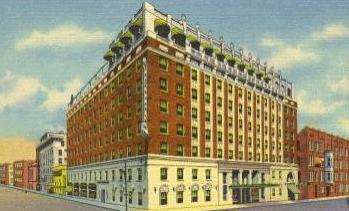
    She arrived in New York City on March 7, after a brief layover in St. Louis on March 6. She checked into the Vanderbilt Hotel at 34th and Park Avenue, where she had a room overlooking the East River. She could see and hear the tug boats in the distance below. Her sister, Connie arrived later and her father came in the following day.

    Georgette liked New York and enjoyed the snow and the rainy weather. She spent time with Connie, who was still waiting for her husband’s return. She wrote to June, “N.Y.’s filled with coastguards & sailors- to-night I went to the automat for dinner & then went to see ‘Passage to Marseille’ on Broadway which gives the appearance of N.Y. Eve on Hollywood Blvd- only Broadway is about 5 times at least more lighted up, more people and also 5 times bigger -.”

    Sherman Billingsley, a rumrunner from the Prohibition days, opened his final version of the Stork on East 53rd Street in 1934, and by the time Georgette, and later June, visited the famed restaurant , the Stork Club had become the most popular dining destination for tourists and celebrites in the country. Billingsley once said, “The finest decoration the Stork can have is a lot of beautiful girls.”  He was famous for giving gifts to patrons, from perfume to fur coats and automobiles.  When Georgette arrived with her father, Billingsley’s sent her a drink “on the house.” Georgette was having a grand time, but she began making plans to return to Los Angeles in late April.

    On July 3, she wrote to “Dearest Junie, Hello lamb-” from Los Angeles, saying, “At present we’re playing bridge and I’m dummy per usual- Maybe I’ll be luck[y] in love since I’m unlucky in cards-.” She registered for classes at UCLA the same day, and later in the month was on the road again, this time to San Diego.

    Before long, Georgette was back at the Hollywood Canteen on Wednesday evenings. Her family had returned to Los Angeles, too, but in August, they left for New York again. She was on her own, living at the spacious El Palacio. In October, she made plans to fly to El Paso, this time to see a boyfriend, but she never made the trip.

    There would be no more traveling for Georgette.

    Chapter 3 ~ The Hollywood Canteen

    During the war years, those left behind when the soldiers shipped overseas, did their part for the effort through sacrifice and hard work. There was rationing of gasoline, food and other staples of Americans life. Families grew vegetables in “Victory Gardens,” bought war bonds and women worked in factories, waiting for the return of their men.

    Around the country, The Red Cross and the USO recruited young women, and in Los Angeles, Georgette signed up as a junior hostess Wednesday nights at the Hollywood Canteen.

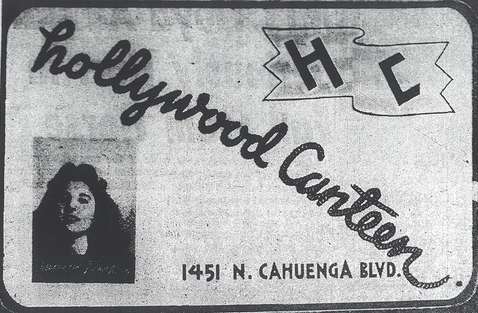
    The Canteen, built by Bette Davis, John Garfield and other Hollywood luminaries, recruited the aid of the motion picture craft unions to turn an old barn at Sunset Boulevard and Cahuenga Boulevard into a night spot for service men. The Hollywood Canteen opened on October 3, 1942 at 1451 North Cahuenga Boulevard and closed on Thanksgiving day, 1945. In less than three years of operation, nearly three million men and women in uniform visited the club. Georgette danced with the young soldiers and was generous with her time and money. She gave rides to the soldiers, often treated them to lunches and invited them into her home.

    The Hollywood Canteen catered to enlisted men, although officers were admitted. Most nights, two bands played and the volunteer hostesses danced with the soldiers. Almost every movie star in Hollywood donated his or her time and effort to make the experience memorable for men and women in uniform. The snack bar, which provided coffee, doughnuts, sandwiches and milk, all free of charge, was a popular spot. No alcohol was served or permitted in the club.

    Young women were screened before they were accepted as volunteers. They were fingerprinted and issued photo identification cards.  They were not allowed to enter or leave with soldiers. The junior hostesses felt it was a privilege to be part of the Canteen and were proud of their service. A number of the young female volunteers also worked at the Los Angeles Times.  Several hostesses knew each other socially outside the Canteen.

    Georgette and her good friend, June Zeigler, worked at the Times and volunteered Wednesday evenings at the Canteen.  June was also friends with Doris Puckett, who worked at the Times and volunteered at the Canteen on Tuesday nights. Another friend, Shirley Burke, also worked at the Times and volunteered at the Canteen.

    Doris, who no longer lives in California, but recently visited the old site of the Hollywood Canteen, remembered dancing with servicemen and helping them write letters. Doris and June worked at the classified counter at the Times.  Georgette worked for Becky Webb in the Women’s Service Bureau.  Doris and Georgette did not know each other, but Doris remembers Becky Webb telling her after the murder that Georgette let her know that she was an heiress.

    Mrs. Atwood, the janitor’s wife at the El Palacio, said, “She seemed happy and contented. She was very much interested in war work- especially the Hollywood Canteen, where she went every Wednesday evening.”

    “She was real proud of being a junior hostess.”

    Chapter 4 ~ Murder at El Palacio

    On Wednesday, October 12, Georgette went out with Rose Gilbert, who said she was in “good spirits.” “We shopped and had lunch together, and she seemed perfectly happy. I was with her until two o’clock in the afternoon.” She had her hair done and cashed a check for 175 dollars and bought a ticket to fly to El Paso to see a boyfriend, Jerry Brown, who was stationed at Fort Bliss. She and Jerry met each other on June 13 at the Hollywood Canteen. At that time, he was stationed at Camp Callan in San Diego County. They hadn’t seen each other since then and she was looking forward to flying to El Paso for his graduation from an army training program.

    Georgette spoke briefly to El Palacio janitor, Frederick Atwood, at the apartment in the afternoon. She thanked him for taking boxes to the basement for her. One source reported that she may have given a ride on Sunset Boulevard to Army Air Corp Sergeant Gordon Aadland, who told police, “That girl was nervous.” Later in the day, June met Georgette in Hollywood. She “was knitting in her car in front of the Canteen for half an hour before going in.” According to Deputy Sheriff Hopkinson, June said that Georgette “appeared to be nervous and had asked her to spend the evening with her at her apartment. However, she gave no explanation for her nervousness or any reason why she wanted her to spend the night with her. She remained in the car until 7:00 o’clock at which time they entered the Canteen-.”

    The junior hostesses danced that evening, as usual ,with the servicemen. June noticed that one soldier was persistent in jitterbugging with Georgette. “She didn’t want to dance that way because she preferred the waltzes and more conservative style, but he kept cutting in, so she finally consented to try. She said later that she was annoyed with the jitterbugging soldier.”

    Hopkinson said that, “the records show that she signed out at 11:30 P.M.” June and Georgette said goodbye outside and Georgette walked to her car alone and drove off.

    * * *

    Georgette arrived home sometime around midnight on October 11. She parked her car and entered her apartment. She went into the kitchen to make a snack for herself. She ate a can of string beans and cantaloupe, cleaned her dishes, spoon and fork and tossed the remains of the fruit into the trash. Fredrick Atwood, the janitor, heard the sound of high heels pacing around the kitchen in her apartment. About midnight, he heard what sounded like a tray crashing to the floor. Then, at 2:30 am, a neighbor heard a woman scream.

    “Stop, stop! You’re killing me!”

    Sometime in the wee hours of the morning Georgette met her killer. She may have invited him in or he may have laid in wait. Her bedroom was mostly undisturbed. She had changed to pajamas, the bottom half left on the floor of her bedroom. There were two ashtrays with cigarette butts in them on the floor. She may have invited the killer home when she thought no one would notice. Or, he may have forced his way in before or after she returned home.

    According to the Metropolitan edition of the October 14, 1944 Daily News, Georgette’s neighbor, Ginny Weidler, “who lives next door, said she knew Miss Bauerdorf quite well, and that on Wednesday night she heard no noise from her neighbor’s apartment.”

    But, something went wrong. Georgette had time to scream and fight back, but in the end she lost the struggle. Her body was placed face down in her bathtub and the hot water had been turned on. A cloth was clenched between her teeth, but part of it had been torn away.

    Georgette had fought against death.

    Chapter 5 ~ The Next Day

    On the morning of the murder, Frederick Atwood, the janitor and his wife and one of his daughters entered Georgette’s apartment after they found her front door ajar. They had just finished cleaning another tenant’s apartment at 11:10 am and planned to clean Georgette’s next. Hearing water running upstairs, Mrs. Atwood went up the stairs and called to her husband that there was someone in the bathroom. Mr. Atwood ran up the stairs and found Georgette’s body in the bathtub, face down. He said, “- her face was in under water and her hair floating on top.”

    Atwood testified later that, “We usually got around to the apartment around 10:30 and my wife went to the bedrooms and the bathrooms first and my daughter did the bathrooms and my wife, the bedrooms, and I cleaned up around.”

    Atwood said the bathtub was, “about three parts full, quite a ways up the tub and we thought she had fainted and I reached in there myself to drain the water in the hopes we could bring her to.We didn’t know what to do.”

    He told how he reached in the tub to pull the stopper and open the drain, but discovered there was a handle instead. He mentioned touching her right forearm, thinking she was possibly still alive.

    Atwood said he did not notice any blood on her body, that she wore a “short jacket” of pinkish color, but that he could not tell if it was open or buttoned or had been torn. He said that she was, “kind of laying on the left side with the face down and with the right arm straight back behind her, feet kind of sticking up at the back of the tub by the curtain.” He also said she was completely in the tub with the curtain partially drawn. There was hot water dripping into the bathtub and her body “felt kind of warm.”

    The Los Angeles Sheriff’s Department handled the case. A.L. Hutchison, Deputy Sheriff arrived at the crime scene at 12:10 pm. Inspector William Penprase was going over the physical evidence when he arrived. Hutchinson recounted his investigation on the day of the discovery:

    “When I got the call I went directly out there and took our County camera along and I arrived there and a couple of boys from the Hollywood Substation were there, and a couple of radio car men, and Mrs. Gilbert, the secretary, was there, and I went to the bathroom, which was on the second floor and I found the dead body of the victim in the bathtub and her face was lying on the bottom of the tub straight down, and the body kind of lying on the left side. There was no water in the tub at the time. She had the upper part of a pajama suit on. That was wet, and alongside of the tub upon the floor of the bathroom was a wet Turkish towel and it looked kind of dirty, but it was wet, so I went into the bedroom then and the bed didn’t seem to be mussed up. There were two sheets lying on the bed that hadn’t been disturbed, but the blanket had been thrown back and there was an indentation in the pillow and looked as if somebody had been lying on the bed on the two sheets and covered by the blanket. There was a Daily News folded up, lying on the bed alongside of the pillow that was folded up the same as the carrier boys fold them up when they toss them on the porches. That was on the bed alongside of the pillow. On that bedroom floor was a blood spot between the bed and door leading to the bathroom. There was a blood spot there and there was discoloration around the blood spot and I felt it and it was wet, that is the carpet was wet all around it – had indications of somebody having tried to use a wet towel and rub it out. Her pocketbook there was lying on the floor alongside of the bed between the bed and the door leading to the bathroom. There was quite a bit of jewelry on the dresser, which looked like it had been untouched, very valuable jewelry, watches.”

    When asked at the inquest if it appeared that there had been a struggle, Hutchinson said, “No indication. The bed didn’t show it and nothing in the room turned over or disturbed, and the only thing is her pocketbook was lying on the floor alongside the bed. There were a couple of ashtrays there on the floor and they hadn’t been turned over and they still had cigarette buts in them, and they hadn’t been disturbed, and they seemed to have been there right along.”

    Hutchinson said, “She looked like she had been dead eight or ten hours at least. That was the opinion of the mortician there, too.” Rigor mortis had set in.

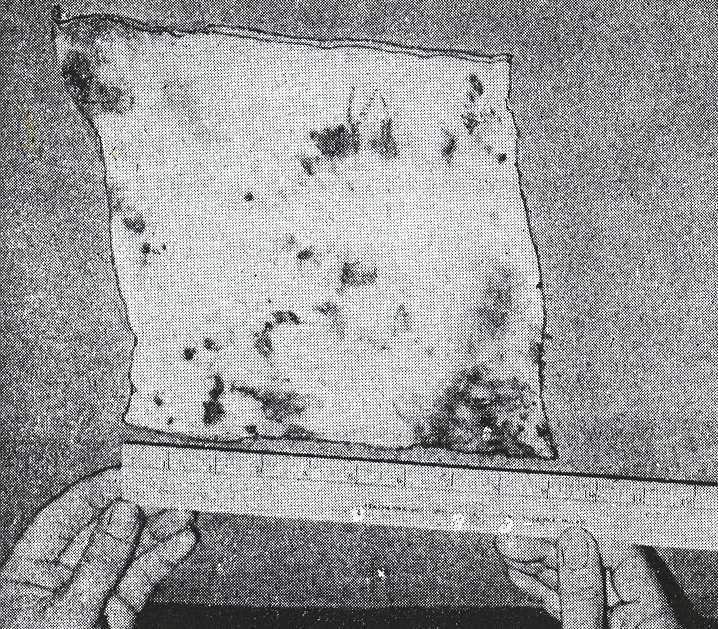
    Georgette had been raped and killed by someone who waited for the right moment. The cause of death was strangulation. A nine inch by nine inch piece of cloth was found forced down her throat, with about one inch protruding outside her clenched teeth. The cloth had a red border around it and had been described also as a “piece of toweling” and as part of a bandage that is used for sprains. The light bulb on her porch was unlit, possibly to cover the exit of the intruder after the murder. Atwood, the janitor, said, “- the light bulb was at least not screwed in a couple of turns.” All the interior lights in her apartment were turned off. A. L. Hutchinson believed that the intruder knew the apartment already.

    “Rape, not murder, was the motive,” he said.

    Deputy Sheriff Raymond T. Hopkinson and Lieutenant Garner Brown were called to the Los Angeles County Morgue to examine Georgette’s body after it was removed from the apartment. Captain Gordon Bowers of the sheriff’s department investigated the crime and thought it possible that the killer entered Georgette’s apartment before she arrived home about midnight.

    Frank A. Nance, the coroner, made his report. There was a bruise on the right side of the back of her head, about a half inch in diameter.She had a half inch area of skin erosion on the upper area of her left hip. There was a three inch long, half inch wide area of skin erosion “above the brim of the pelvis on the left side of the abdomen.” On her right hand, her middle finger knuckle had a slight abrasion. There were also several bruises on the knuckles of the same finger. There were “six distinct bruises” on her right thigh. There were two other areas on the thigh that corresponded “to the imprint of fingers and thumb.”

    A “wash cloth” was “inserted into the mouth and carried far back into the larynx, sufficient to be impacted therein.” There was secondary bleeding from the nose, and “The lips, both upper and lower, show bruised areas where they rest over the teeth and around the mouth., extending down over the chin, more to the left that the right are bruised areas caused apparently by pressure. There is one slight break in the surface of the lower lip below the second right incisor tooth.”

    Georgette’s heart, kidneys, liver and other organs appeared normal. “Vagina contents show large number of spermatozoa. The lower part of the entrance to the vagina, the frenum, is torn and there is some hemorrhage from this torn area.”

    She had been raped and strangled.

    Chapter 6 ~ Suspects

    Deputy Sheriff for Los Angeles County, Raymond T. Hopkinson said, “-we have examined the personal effects of the victim, her correspondence, and she has corresponded with some 23 or 24 Service men in various parts of the World War theatre, and have checked her movements during Wednesday, and eliminated all of the present help at the apartment house-.” Many were excluded from the investigation, but June Zeigler mentioned a tall, 6’ 4” soldier who was interested in Georgette, but whom she did not like. Rose Gilbert, who spent time in the Fountain Avenue apartment, said that Georgette had entertained men in her home, but only briefly.

    June had said a soldier was “cutting in all evening and that she danced with him “only to avoid a scene.” Cosmo Volpe was brought in for questioning and later released. Volpe, who danced with Georgette that night, later said, “She was not a good dancer, but wanted to learn. I was a professional dancer back in Astoria, Long Island, and I’m a good jitterbug.”

    Kenneth Raymond a 23 year old army deserter, was accused of kidnapping and possibly killing 6 year old Rochelle Gluskoter in the 1940’s. At the time of his arrest in 1946, he was questioned about the murder of Georgette Bauerdorf. He was described as a “gangling, 6 foot tall youth” and a “nightclub dancer.” The FBI labeled Raymond, alias Raymond Pulaski, as a “one man crime wave.” He had a history of robbery and assault, but there was not enough evidence to charge him in the Bauerdorf murder.

    As time passed, the trail grew cold, and the confessors began to appear.

    In December, a 22 year old man walked into the FBI offices in San Francisco and said he had killed Georgette Bauerdorf. Detective Hopkinson left for the Bay Area to talk with the man.

    “I met the girl on a street-car and she asked me to accompany her home. When we got there, we talked for awhile and then I bummed her for a cup of coffee. Pretty soon a soldier came in and stayed about an hour. Then, after he left, I strangled her.” Hopkinson was suspicious of his story, and eventually the man admitted to fabrication. “I wanted to die in the chair because I had nothing to live for. I was afraid to commit suicide.” The suspect, John Lehman Sumter, had been discharged from the army for writing bad checks. His family later revealed that he had spent time in a sanitarium in Georgia.

    A year after the killing, a high school student found a letter addressed to the police. She turned it over to authorities.

    “Sometime after Oct. 11, the one who murdered Georgette Bauerdorf will appear at the Hollywood Canteen. He will be in uniform. Since he committed the murder he has been in action on Okinawa.

    “The murder of Georgette Bauerdorf was divine retribution. Let the Los Angeles police arrest the murderer, if they can -”

    June Zeigler said, “Georgette did know one soldier who was extremely tall- probably six feet four inches at least. She met him at the Canteen through another soldier who is now overseas. This tall man gave Georgette quite a rush, but after dating him a few times, she refused to go out with him again. Said she just didn’t like him.” Unfortunately, June could not remember the soldier’s name.

    Another suspect, Robert George Pollock White, was arrested in San Diego after he was reported to have forced a cloth down the throat of a 65 year old woman whom he had attacked. The suspect said he had been in Los Angeles at the time of the Bauerdorf murder.
    One newspaper article said, “Miss Bauerdorf’s duplex apartment was a ‘little overnight hospitality center’ for service men who, in town on leave, had no other place to sleep. Of this sheriff’s investigators [were] convinced after piecing together the stories of a score of persons who knew her habits and after leafing through large bundles of ‘thank you’ letters from soldiers, sailors, Marines or Coast Guardsmen, most of whom are now in various combat zones, who had slept in the downstairs living room of the suite.”

    Over the next few years, other suspects were investigated, but nothing came of the inquiries. The murder of Georgette Bauerdorf remains unsolved.

    Chapter 7 ~ Postscript

    Following the coroner’s inquest, Georgette’s body was released to Pierce Brothers Mortuary and was sent via railroad to New York. Her father had her buried in Woodlawn Cemetery in Long Island in the family plot. The war would be over in less than a year and the old converted barn at Sunset and Cahuenga would shut down on Thanksgiving day in 1945. Soldiers would return to the States, sign up for the G.I. Bill, grab their lunch boxes and go to work. Young families moved to the suburbs and life went on. Georgette Bauerdorf’s unfinished story would become part of the world left behind, the world of junior hostesses and the young soldiers who came to dance with them at the Hollywood Canteen.

    As of 2009, Georgette’s sister, Constance, resides in New York with her husband,  Carroll Cartwright, a former special agent for the FBI in the 1940’s. Husband and wife have an interest in Southeast Asian art and have made donations to the Museum of Fine Arts in Boston.